
Introducing Orbitra: Manage Multiple Marketplaces from One Platform
Discover Orbitra, an AI-first multichannel commerce platform for managing product catalogues, marketplace listings, shared inventory, orders, and shipping.
7 min read · 28 October 2026
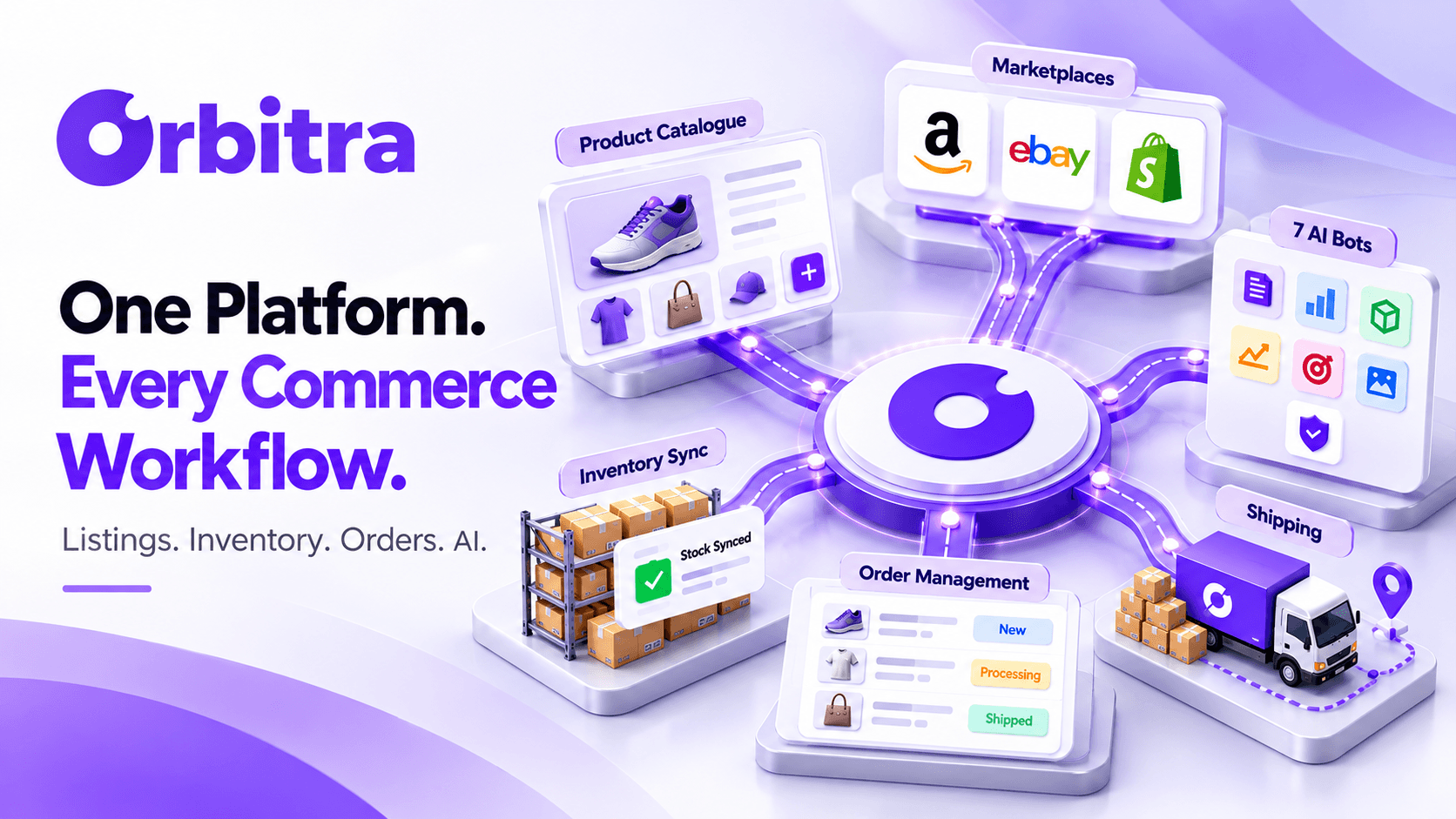
Manage products, simplify marketplace operations, and make smarter selling decisions with Orbitra Commerce, your AI-first multichannel commerce platform.
Introduction: The Challenge of Multichannel Commerce
E-commerce is no longer limited to a single online store. Businesses are expanding across marketplaces and direct-to-consumer (D2C) channels to reach more customers and create new growth opportunities.
But as a business expands, managing product catalogues, listings, inventory, pricing, and orders across different platforms can become increasingly complex. Each marketplace has its own listing requirements, product attributes, image guidelines, and operational workflows. Keeping everything consistent can take time and resources away from growing the business.
A multichannel commerce platform helps bring these activities into a more connected workflow.
In this guide, we explore the challenges of multichannel selling, the key capabilities of Orbitra Commerce, its seven AI Orbs, and how businesses can get started.
What Is Orbitra Commerce?
Orbitra Commerce is an AI-first multichannel commerce operations platform designed to simplify how businesses manage products and sell across supported online channels.
Rather than treating every marketplace as a separate operation, Orbitra provides a centralized environment for product management, marketplace listings, inventory synchronization, supported order workflows, and shipping.
What makes Orbitra different?
One catalogue for marketplace selling
Create and organize product information centrally, then publish products to eBay and Amazon using marketplace-specific listing settings.
One shared stock pool
Coordinate inventory across connected channels. When a sale reduces available stock, the shared stock pool helps update other connected listings, reducing the risk of overselling.
Connected order and shipping workflows
Manage supported eBay and Amazon orders, compare shipping rates, purchase shipping labels, and send tracking information through supported shipping integrations.
Synchronization you control
Configure supported product fields and synchronization directions to help maintain consistency without unnecessarily overwriting existing listing content.
AI-powered assistance
Use Orbitra’s seven AI Orbs to support tasks such as listing optimization, pricing analysis, inventory forecasting, product performance analysis, channel recommendations, and compliance reviews.
Orbitra brings these capabilities together to help sellers manage their multichannel operations through one connected platform.
Why Do Sellers Need a Multichannel Commerce Platform?
Selling through multiple channels can help businesses reach new audiences, but managing each channel independently creates operational challenges.
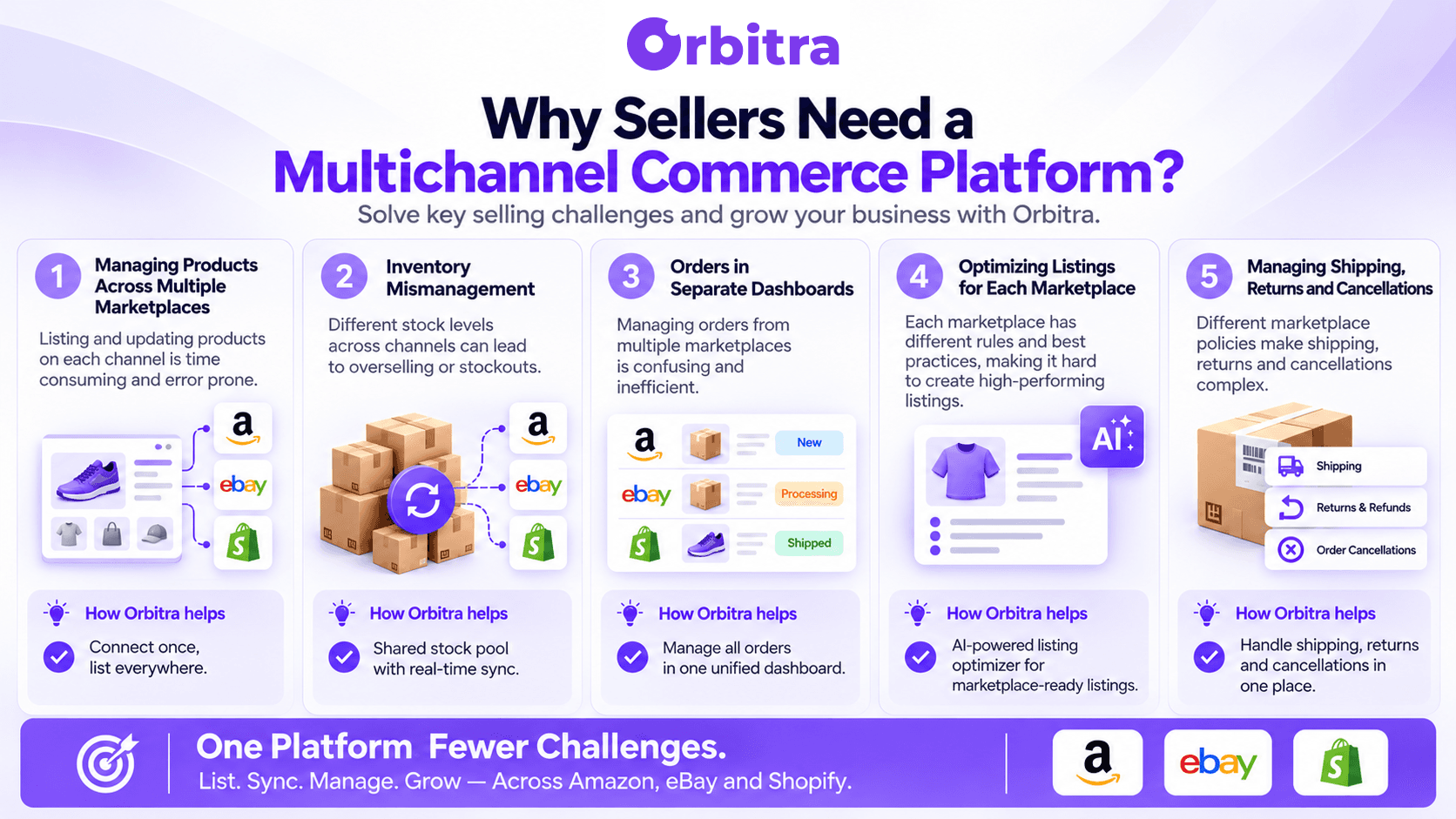
Together, these capabilities help businesses move beyond disconnected processes toward more organized multichannel selling.
Who Can Benefit from Orbitra Commerce?
Orbitra Commerce is designed for businesses that want a more connected approach to managing products and marketplace operations.
New marketplace sellers
Businesses entering online marketplaces need to organize product information and understand marketplace-specific requirements. Orbitra’s centralized catalogue and listing workflows help create a more structured starting point for marketplace selling.
Existing multichannel sellers
Sellers already operating across multiple channels often need to maintain consistent product information and coordinate inventory. Orbitra helps bring supported catalogue, listing, stock, order, and shipping workflows together.
Growing D2C brands
Brands selling through their own online stores may want to expand their reach through marketplaces. Orbitra supports Shopify catalogue import and stock synchronization, alongside supported marketplace publishing and management workflows for eBay and Amazon.
Marketplace-focused businesses
Businesses managing larger catalogues or multiple marketplace accounts can benefit from centralized product management, configurable synchronization, inventory controls, shipping workflows, and AI-assisted tools.
Whether a business is starting to sell on marketplaces or managing an established multichannel operation, the goal is to make everyday workflows more manageable while keeping sellers in control.
Explore Orbitra Commerce’s Seven AI Orbs
AI can help sellers work with product information, identify potential issues, and make more informed commerce decisions. Orbitra Commerce brings seven specialized AI Orbs into its multichannel commerce approach.
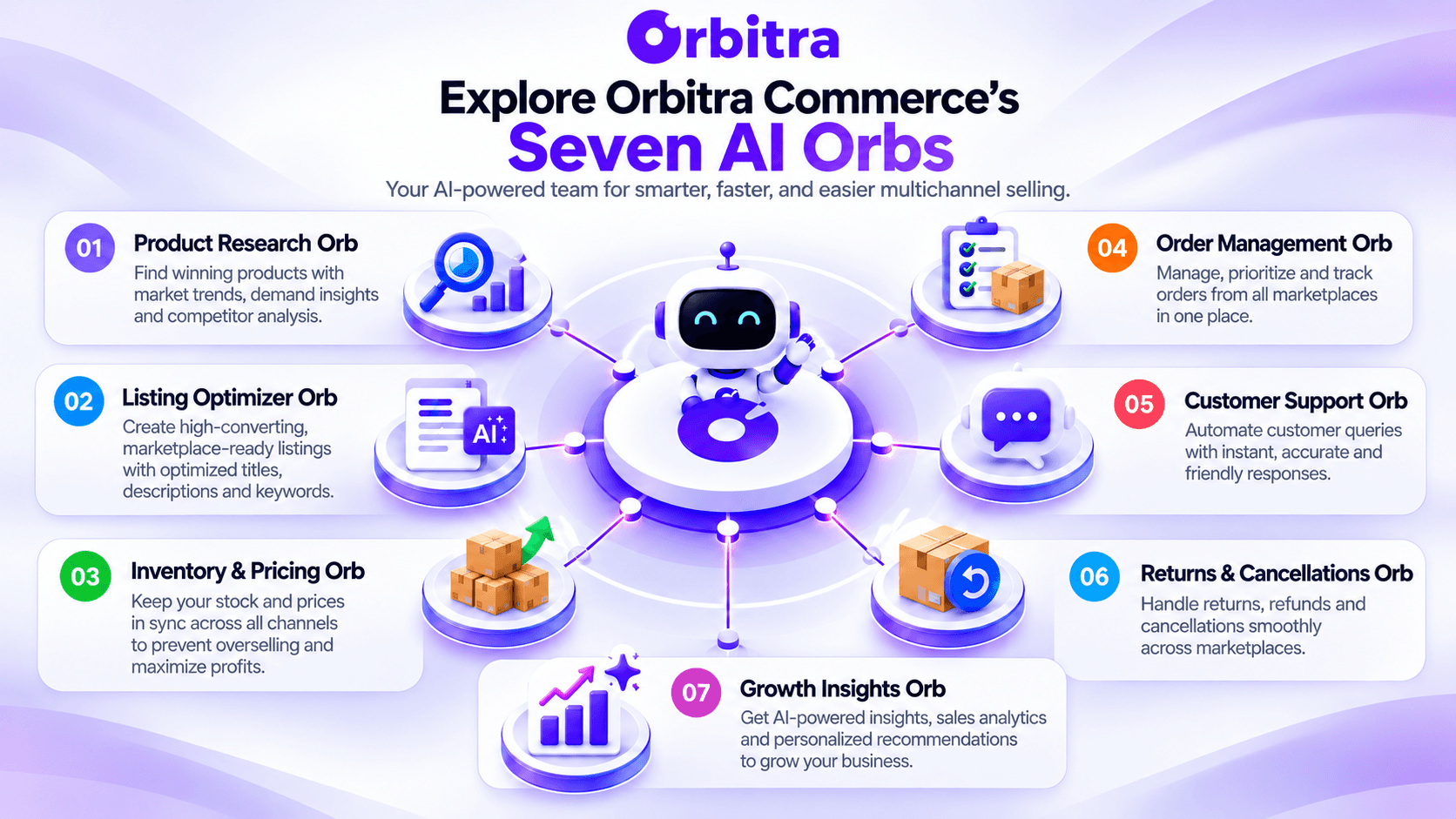
From smarter listings to better business decisions, Orbitra’s seven AI Orbs help simplify everyday multichannel commerce.
How to Get Started with Orbitra Commerce
Getting started with a multichannel commerce platform begins with understanding your existing product setup and identifying the channels and workflows you want to manage.
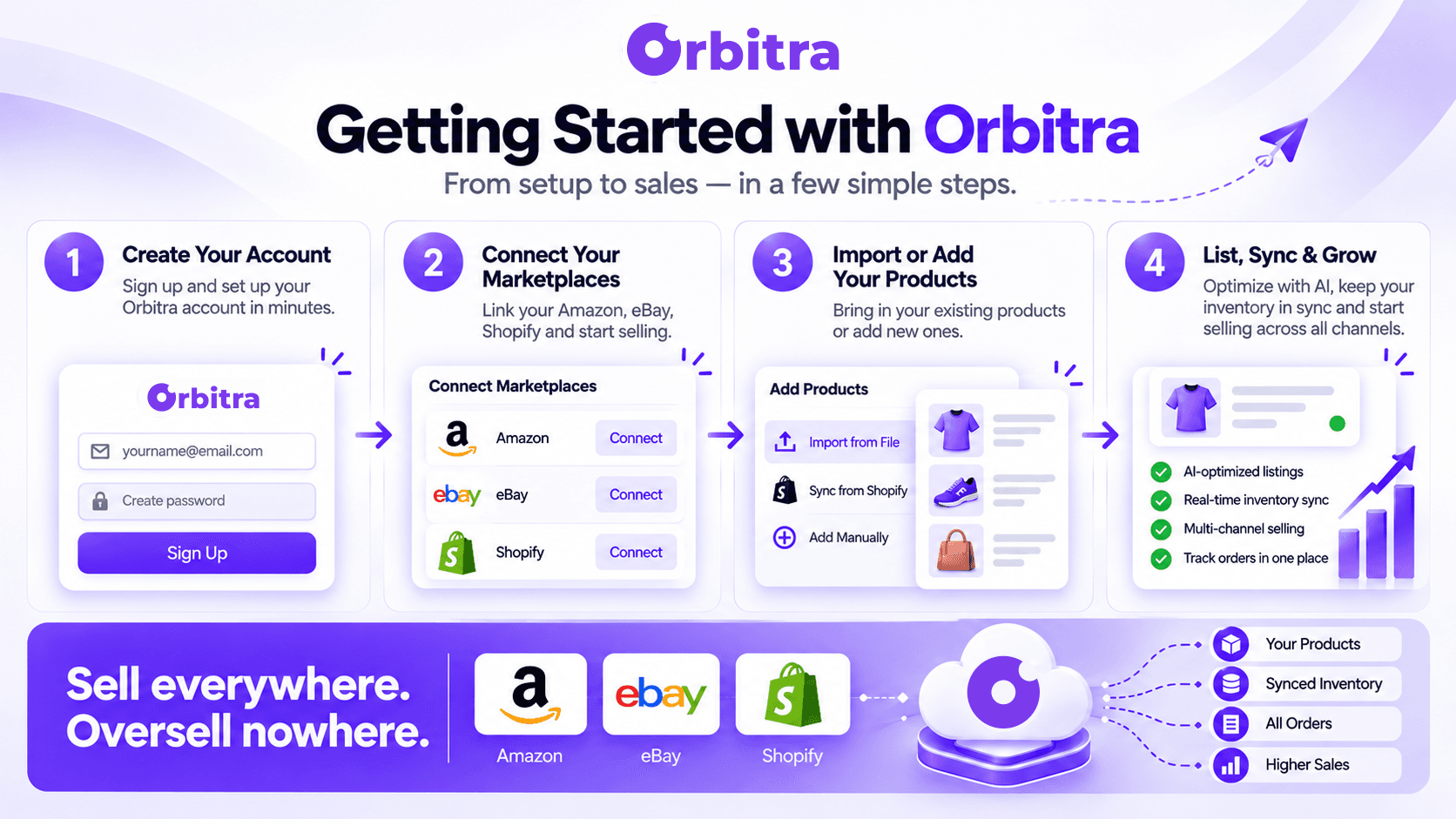
Step 1: Review your current commerce setup
Identify where your product information currently lives. You may manage products through Shopify, sell directly on marketplaces, or use a combination of both.
This helps determine the appropriate connection and product-import workflow.
Step 2: Connect your supported channels
Connect the relevant Shopify, eBay, or Amazon accounts through their supported connection flows.
The available operations differ by channel. Shopify serves as a product catalogue source and synchronization channel, while Orbitra supports marketplace listing and order workflows for eBay and Amazon.
Step 3: Import and review your product catalogue
Bring your product information into Orbitra using the supported import options, including channel import or CSV bulk import where applicable.
Review important details such as:
- Product titles and descriptions
- SKU identifiers and product variants
- Prices and available stock
- Product attributes and category information
- Product images and listing content
A well-organized catalogue provides a stronger foundation for marketplace operations and AI-assisted analysis.
Step 4: Configure listings and inventory
Prepare products for the relevant marketplaces and review channel-specific listing requirements.
Configure supported synchronization settings, stock allocation rules, and out-of-stock behaviour according to your business needs. These settings help coordinate inventory and maintain control over product information.
Step 5: Organize order and shipping workflows
Use Orbitra’s supported order management workflows for eBay and Amazon. Where applicable, compare shipping rates, purchase labels through Shiprocket or ShipStation, and send tracking information back to the relevant marketplace.
Remember that native Shopify sales do not appear in Orbitra’s order inbox.
Step 6: Use the AI tools relevant to your business
Identify the tasks where AI assistance can be most useful. Depending on your priorities, you may use the Listing Optimizer, Pricing Intelligence, Inventory Forecasting, SKU Revenue Ranking, Channel Recommendation, Image Compliance Review, or Product Compliance Review.
Review the results, verify relevant information, and decide which recommendations fit your business requirements.
Step 7: Refine your multichannel strategy
As your operations grow, regularly review product information, inventory settings, listing quality, order workflows, and the insights available through Orbitra.
A consistent review process can help you identify issues, improve operational organization, and make more informed decisions as you expand across channels.
Frequently Asked Questions About Orbitra Commerce
What is Orbitra Commerce?
Orbitra Commerce is an AI-first multichannel commerce operations platform that helps sellers manage product catalogues, supported marketplace listings, inventory, orders, shipping, and AI-assisted workflows through one connected environment.
Which marketplaces does Orbitra support?
Orbitra supports Shopify, eBay, and Amazon, with different capabilities for each channel. Shopify is a catalogue source and synchronization channel; Orbitra publishes new marketplace listings to eBay and Amazon.
Can Orbitra help reduce overselling?
Yes. Orbitra’s shared stock pool coordinates inventory across connected channels. When stock changes, connected listings are updated to reflect the available quantity, helping reduce the risk of overselling.
Can I publish products to multiple marketplaces from one catalogue?
Yes. Orbitra supports publishing products to eBay and Amazon from a central catalogue using the appropriate marketplace-specific listing settings.
Can I synchronize product information between Orbitra and connected channels?
Orbitra supports synchronization for supported channels and fields. Sellers can configure relevant synchronization settings, including supported two-way synchronization and field-level controls.
Does Orbitra provide integrated shipping?
Yes. Orbitra supports shipping through Shiprocket and ShipStation, including rate comparison, label purchasing, and tracking updates for supported marketplace orders. Shiprocket also supports COD-aware shipping checks in India.
Are all seven AI Orbs available?
Yes. Orbitra’s seven AI Orbs are now live and working. They support listing optimization, pricing intelligence, inventory forecasting, SKU revenue ranking, channel recommendations, image compliance review, and product compliance review.
Is Orbitra suitable for international sellers?
Orbitra supports separate connected marketplace accounts across countries, with channel-specific listings, pricing, currencies, and stock allocation settings. Sellers should configure the relevant regional and currency settings for their operations.
Conclusion: Simplify Multichannel Commerce with Orbitra
Managing multiple marketplaces does not have to mean multiplying the complexity of every operational task.
Orbitra Commerce brings together product catalogue management, supported marketplace listings, shared inventory, order management, shipping workflows, and seven AI Orbs designed to support smarter multichannel selling.
From improving listing content and reviewing compliance to evaluating pricing, forecasting inventory needs, understanding SKU revenue, and exploring channel opportunities, Orbitra helps sellers bring more structure and intelligence to their commerce operations.
Whether you are entering new marketplaces or improving an established multichannel business, Orbitra offers a connected approach to managing commerce workflows and supporting business growth.
Import from Anywhere. Sell Everywhere. Scale Smarter.
Ready to explore a more connected approach to multichannel commerce?
Learn MoreMore from Orbitra
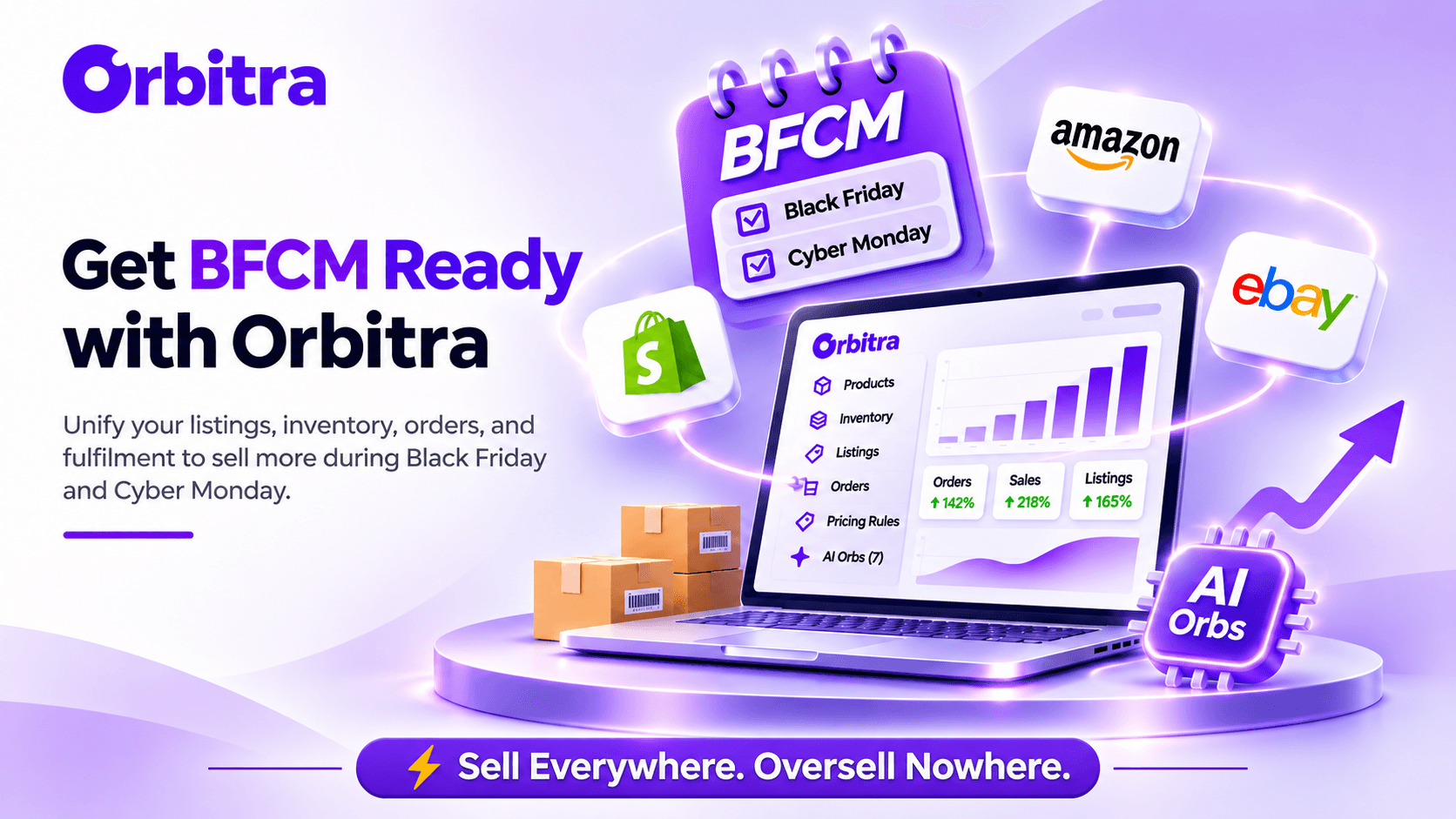
Orbitra: Your Multichannel Marketplace Management Platform for BFCM
Black Friday and Cyber Monday (BFCM) are among the biggest shopping events of the year. For eCommerce brands and growing businesses, they bring opportunities…
4 min read · 6 November 2026
Orbitra Commerce Is Now Live : An AI-First Multichannel Commerce Platform
Expanding across online marketplaces creates new opportunities for ecommerce businesses, but it also brings operational challenges. Managing product…
2 min read · 19 October 2026